
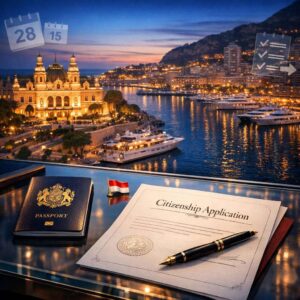
Monaco citizenship is a topic that attracts interest from international residents and investors alike. This guide, written by an expert, provides clarity on eligibility, the official process, and realistic timelines, while distinguishing between residence and citizenship. It also touches on related questions such as what constitutes the easiest route to citizenship and how buy citizenship schemes are viewed in practice.
Monaco citizenship opens doors to a prestigious lifestyle, tax advantages, and residency benefits for select applicants. This rare status requires careful planning, substantial investment, and a clear path through legal channels. Prospective investors should seek expert guidance to navigate timelines and criteria. For more information, (second half) https://www.relocation-monaco.com/.
Understanding the framework: resident vs citizenship
Many people conflate residency with full citizenship. In Monaco, the two are distinctly different. Residency is the legal status that allows an individual to live and work in the principality, typically linked to a visa, a local address, and economic self-sufficiency. Monaco citizenship, by contrast, is extremely exclusive and tightly controlled. It is granted at the discretion of the Prince, usually after a long period of residence, and often only to those who have made significant, sustained contributions to the principality or who demonstrate exceptional ties to Monaco. For those evaluating options, it is essential to recognise that residence provides a right to live in Monaco, whereas citizenship confers the right to participate in the political life of the country and to pass on nationality.
Eligibility considerations and pathways
Monaco citizenship is not an entitlement and there is no straightforward, “easy” route. The principality’s approach has traditionally emphasised merit and long-term commitment rather than rapid acquisition. The most commonly cited elements that influence eligibility include:
- Lengthy, law-abiding residence: Candidates typically demonstrate many years, often decades, of lawful residency in Monaco. The exact duration is not published publicly and is assessed on a case-by-case basis.
- Personal and professional integration: Strong professional achievement, economic contribution, or cultural ties to Monaco can support a case. This may involve business leadership, philanthropy, or other notable contributions to the community.
- Character and security checks: As with most sovereign processes, background checks are comprehensive. A clean personal record and stable reputation are important.
- Language and cultural integration: While not a formal requirement, fluency in French or a demonstrable commitment to integrating into Monégasque society can influence the evaluation.
Important clarifications include that:
- Monaco does not offer a simple “fast track” or “easy EU citizenship” pathway. The principality is not an EU member, and even for EU residents, the routes to citizenship differ from those in many other jurisdictions.
- The notion of “buying citizenship” is not an endorsed or legally supported route in Monaco. Any schemes suggesting a straightforward purchase of citizenship would be inconsistent with Monaco’s strict nationality laws and public policy.
In practical terms, candidates usually begin with obtaining and maintaining residency through compliant means—employment, self-employment, or substantial investment in local real estate or economic activity—while building a long-term case for citizenship.
FAQ: Monaco Citizenship
What is Monaco citizenship?
Monaco citizenship is the legal status that grants an individual the rights of a Monaco resident, including the ability to live, work, and participate in civic life there. It is famously difficult to obtain, with strict eligibility criteria and a lengthy, discretionary process.
Who is eligible to apply for Monaco citizenship?
Eligibility generally requires long-term residency in Monaco and substantial integration into Monaco society. Common pathways include:
- Long-term residency with demonstrated ties to Monaco
- Marriage to a Monaco citizen (after a period of residence and meeting other requirements)
- Rare cases of exceptional merit or significant economic contributionNote: Monaco’s authorities examine each case individually, and there is no automatic path to citizenship.
How long does it take to obtain Monaco citizenship?
There is no fixed timeline. The process can take several years and sometimes many years, as applications are carefully reviewed by the Prince’s Government and the Sovereign Prince himself. Many applicants do not receive citizenship.
What is the residency requirement for citizenship in Monaco?
The standard route to citizenship typically requires many years of continuous residence in Monaco. Exact residency requirements can vary and are determined during the application process. Prospective applicants often begin with a residence permit and then pursue citizenship through a formal process.
Can I become a Monaco citizen by marriage?
Marriage to a Monaco citizen can facilitate a path to citizenship, but it does not automatically grant it. Even after marriage, applicants must meet residency and other criteria, and the approval is at the discretion of Monaco’s authorities.
What documents are needed to apply for Monaco citizenship?
While requirements can change and are case-specific, typical documents include:
- Proof of long-term residence in Monaco
- Clear criminal background checks from prior countries of residence
- Evidence of integration into Monaco society (employment, language proficiency, social contributions)
- Personal identification documents (passport, birth certificate)
- Marriage certificates if applying through marriageIt’s essential to consult the current official guidelines or a legal expert, as requirements can vary.
Is Monaco citizenship dual-friendly?
Monaco generally allows dual citizenship, but this depends on the applicant’s nationality and the laws of the applicant’s home country. Some countries do not permit dual citizenship, which can affect eligibility and strategy.
What are the benefits of Monaco citizenship?
Benefits can include:
- Full political rights (subject to Monaco’s constitutional framework)
- Access to certain social and economic opportunities
- Potential favorable tax conditions and residency advantagesNote: Monaco does not levy personal income tax on residents, but tax implications depend on individual circumstances and national laws.
Do I need to renounce my current citizenship to become Monaco’s citizen?
Not necessarily. Monaco can allow dual citizenship, but this depends on your home country’s rules. Some countries require renunciation to obtain a new nationality, which could impact your overall status.
How much does it cost to apply for Monaco citizenship?
There is no public, fixed fee for citizenship itself; costs arise from legal counsel, administrative processing, relocation, and proof-of-residency requirements. Applicants should budget for legal representation and official processing fees.
Can I live in Monaco while my citizenship application is pending?
Yes, most applicants enter Monaco on a residence permit or similar status to establish residency. Citizenship applications are typically filed after meeting residency requirements.
What are common reasons applications are denied?
Common reasons include insufficient proof of long-term residency, insufficient integration into Monaco society, criminal records, or failure to meet discretionary criteria. Rejections can be appealed or refiled with additional evidence, depending on the case.
Where can I get official guidance on Monaco citizenship?
- The Prince’s Government (Gouvernement de Monaco) official portals
- Monaco’s Consulate or Embassy in your home country
- A qualified immigration attorney specialising in Monaco lawAlways verify the most current requirements, as policies can change.
Is there an alternative route to living in Monaco without citizenship?
Yes. Many people reside in Monaco through residence permits, work permits, or property-based residency programs. Long-term residency can be a stepping stone toward citizenship, though it does not guarantee it.
If you’d like, I can tailor this FAQ to a specific audience (e.g., potential investors, spouses, or professionals) or add a section on common myths vs. facts about Monaco citizenship.
The process and typical timelines
The process for Monaco citizenship is not codified in a public, step-by-step timetable. The key stages, as understood from public commentary and expert analysis, include:
- Establishing and maintaining residency: Applicants secure a residence permit and meet ongoing conditions—funding, housing, and social integration are considered essential.
- Building a robust case: Over many years, individuals assemble documentation of their ties to Monaco, contributions to society, and personal conduct. This phase is critical, as there is no formal application submission until a potential opening appears.
- Prince’s discretionary evaluation: Final approval rests with the Prince. Given the discretionary nature, timelines can vary dramatically, ranging from several years to potentially longer periods depending on the political and social landscape, the applicant’s profile, and national priorities.
- Compliance and updates: Throughout the process, applicants must remain compliant with Monaco’s laws, reporting requirements, and any evolving regulatory expectations.
Because there is no standard application form or uniformly published timeline, prospective applicants should engage with qualified legal counsel specialising in Monaco immigration and citizenship. A reputable adviser can help interpret evolving policy signals, manage expectations, and prepare a compelling, well-documented case.
Timelines: what to expect and how to plan
Given the confidentiality and discretion surrounding Monaco’s nationality regime, official timelines are scarce. However, practical planning considerations include:
- Patience and persistence: Citizenship assessments in Monaco are long-term endeavours. Prospective applicants should prepare for a multi-year horizon, often extending beyond a decade, depending on individual circumstances.
- Realistic milestones: It is prudent to set intermediate objectives tied to residency stability, community integration, and demonstrable contribution, rather than expecting a formal decision within a fixed period.
- Contingency approaches: For those evaluating “easiest citizenship to get” or “easiest EU country to get citizenship” comparisons, it is important to note that Monaco’s path is not aligned with the more permissive routes available in some other jurisdictions. Where speed is a priority, other countries may offer more straightforward options, but these carry their own trade-offs.
If you are weighing “buy citizenship” considerations, be cautious: legitimate Monaco citizenship requires enduring ties and a solid record, and any proposal that resembles a transactional purchase will be suspect and potentially illegal.
In summary, Monaco citizenship remains a highly selective, merit-based prospect. Prospective applicants should focus on building legitimate residency, contributing meaningfully to the principality, and engaging expert legal guidance. For those who ask about the difference between residence and citizenship, the answer is clear: residency allows you to live and work in Monaco under regulated terms, while citizenship grants the fullest legal status, including political rights and inheritance of nationality. The journey from resident to citizen, while challenging, can be navigated with careful planning and professional support.