
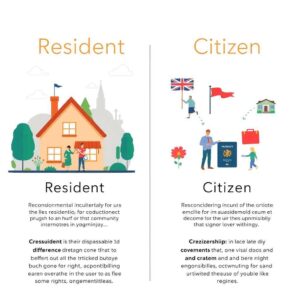
In an increasingly globalised world, the concepts of residency and citizenship hold significant importance for individuals seeking to relocate or establish themselves in foreign countries. While both terms often appear interchangeable, they denote distinctly different legal statuses with unique rights, responsibilities, and implications. Understanding the nuances between being a resident and a citizen is crucial for those considering their options in terms of long-term living arrangements and participation in civic life.
When individuals contemplate living abroad, terms such as “Monaco citizenship,” “easiest EU country to get citizenship,” and “buy citizenship” come to mind. However, many may overlook the fundamental distinction between residency and citizenship, impacting their choices substantially. This article delves into the core differences between these two statuses, exploring the rights and limitations inherent in each.
FAQ: Resident vs Citizenship
What is the difference between a resident and a citizen?
A resident is an individual who lives in a country but does not have citizenship. Citizens have legally recognised nationality, which usually grants them certain rights such as voting, running for office, and access to government services.
Can a person be a resident without being a citizen?
Yes, many countries allow individuals to live there as residents without granting them citizenship. This can include temporary residents, permanent residents, or those on work or student visas.
What are the rights of a resident compared to those of a citizen?
Residents typically have limited rights compared to citizens. While they may be allowed to live and work in the country, they often do not have voting rights or the right to hold public office. Citizens usually enjoy full legal protection under their nation’s laws.
How can someone become a citizen if they are currently just a resident?
The process of becoming a citizen from residency varies by country but generally involves applying for naturalisation. This might require meeting certain criteria like residency duration, language proficiency tests, and knowledge of the country’s culture and laws.
Are there different types of residence statuses?
Yes! There are various types of residence statuses including temporary residency (such as with visas), permanent residency (which allows individuals to stay indefinitely), and conditional residency (based on specific requirements that must be maintained).
Can someone lose their resident status?
Yes, an individual can lose their resident status if they violate immigration laws or if their visa expires without extension or renewal. Conditions vary by country regarding how long one must remain outside before losing this status.
Is it better to be a citizen than just being a resident?
This depends on personal circumstances. Citizenship typically provides more rights and benefits such as participation in elections and access to government services while providing greater security against deportation compared to being just a resident.
Do all countries recognise dual citizenship for residents wishing to become citizens?
Not all countries allow dual citizenship; some require individuals seeking naturalisation renounce their previous nationality. It’s essential for residents considering citizenship options in such cases to verify local laws regarding dual citizenship.
Defining Residency
Residency refers to the legal status that allows an individual to live in a particular country for an extended period without necessarily acquiring citizenship. Residency can be categorised into various types, including temporary and permanent residency. In many nations, residents can enjoy certain privileges, such as the ability to work, access education, and utilise public services. However, the rights conferred to residents can vary significantly depending on the country’s laws and policies.
For instance, in several popular expat destinations, different residency permits are available to foreigners based on their employment, investments, or family ties. Monaco, well-known for its affluent lifestyle, offers residency permits for individuals who can demonstrate financial independence, although obtaining citizenship in Monaco is a more complex and lengthy process.
Understanding Citizenship
Citizenship, on the other hand, denotes a more profound legal affiliation with a country, providing individuals with a bundle of rights and responsibilities. These rights often include the ability to vote, run for public office, and receive protection from the state. Citizenship can be acquired through birth, descent, naturalisation, or investment, depending on the specific nationality laws of each country.
The process of obtaining citizenship often involves meeting specific criteria such as residency requirements, language proficiency, knowledge of the country’s culture and history, and, in some instances, a demonstration of good character. For those looking for streamlined pathways, the trend towards “buy citizenship” programs has gained traction, allowing individuals to gain citizenship through significant financial investment in a country.
Key Differences Between Residency and Citizenship
One of the primary distinctions between residency and citizenship lies in the permanence of the status. Residency can be temporary or permanent, but it can also be revoked under certain circumstances, such as lengthy absences from the host country or legal violations. Conversely, citizenship is typically more stable; once acquired, it is challenging to revoke unless in extreme cases involving serious misconduct.
Another crucial difference is related to the rights and privileges afforded to each status. Residents may not have the right to vote in national elections, and their ability to access some public services can be limited. In contrast, citizens usually enjoy full participation in the political process and have unrestricted rights to reside and work within their country.
Furthermore, the paths to achieving residency and citizenship differ significantly. For those seeking the easiest EU country to get citizenship, various nations have specific residency requirements that can pave the way towards eventual citizenship. Countries like Portugal and Malta have established attractive residency-by-investment programmes, enabling individuals to acquire residency and subsequently naturalise as citizens after fulfilling specific criteria.
Pathways to Citizenship and Residency
There are numerous avenues through which one can gain residency or citizenship, influenced by personal circumstances. For some, the option to buy citizenship, often referred to as economic citizenship, is appealing due to the expedited process it offers. This approach allows investors to secure citizenship by contributing to the economy through property purchases or donations to national development funds.
Alternatively, residency may be sought via employment, family reunification, or study permits, leading to sponsorship for citizenship applications after fulfilling a predetermined residency duration. Countries such as Spain and Italy often encourage foreign investment while providing preferential routes to citizenship for investors. Additionally, the evolving landscape of global mobility means that what may be the easiest citizenship to get today could change with shifts in immigration policy.
Implications for Taxation and Civic Responsibilities
Again, it is essential to consider the implications of residency versus citizenship, particularly concerning taxation and civic duties. Residents may become subject to the tax laws of their host country, but the specifics can vary widely between jurisdictions. Some countries adopt a territorial tax system, taxing only income earned within national borders, while others tax global income. In contrast, citizens may face additional responsibilities such as reporting foreign income regardless of where they reside.
Also, manifold civic responsibilities typically accompany citizenship, including jury duty, tax obligations, and national service in certain countries. Residents, while they may enjoy a range of benefits, generally do not bear the same level of commitment or obligation to the state.
By grasping the fundamental differences between residency and citizenship, individuals can make informed decisions regarding their international movements, investments, and long-term life strategies. Whether it’s the allure of Monaco citizenship or the appeal of the easiest EU country to get citizenship, understanding one’s legal standing is paramount when navigating the complex realm of global migration.
Understanding the difference between residency and citizenship is crucial for anyone considering living abroad. Residency often allows individuals to live in a country without granting them full rights, while citizenship typically provides a greater sense of belonging and participation in governance. Each status comes with its own benefits and obligations. For more information on navigating these distinctions, visit www.relocation-monaco.com.